Since August 31, every website can use a setting in Search Console to remove its links and content from AI Overviews, AI Mode and the generative AI features in Discover. Google's help page describes it as one switch for all of those features and says sites that leave get no traffic or impressions from them. Digiday reported today that many publishers are holding off on the decision until Google shares click data, which it has to give UK publishers by December 3 under the CMA's publisher conduct requirement. Page-level controls are due by March 3, 2027.
I have run tech publications since 2007 and Google Search has been the main source of new readers for almost all of that time. I understand why publishers want to leave. Chartbeat's 2026 Publisher Playbook showed Google Search referrals across its network falling 40.2% from July 2025 to July 2026, after a 21.9% drop the year before. Even so, I would not opt a site out today. The early evidence says leaving costs more than it saves and Google's own results suggest that weak clicks from AI answers now hurt Google as well.
One site's test
Cyrus Shepard opted his Zyppy site out of Google's AI features from September 1 to September 29 and compared the results with the following four weeks. Search Engine Journal's write-up says he estimated a click-through rate of about 0.9% on AI impressions against a sitewide average of about 0.4% and that AI features produced about 21% of the site's search clicks. With a small lift in regular listings included, he put the share tied to AI features at 23%. Search Engine Roundtable reported the same 0.9% estimate when he first shared it. This is one site and Shepard describes the result as directional. It is also the only opt-out data I have seen and it supports staying in.
Google has the same problem
The more useful data came from Alphabet's third quarter. Google Search & other revenue was $63.35 billion, up 12% from a year earlier. In the second quarter it was $63.27 billion, so search revenue was almost flat from one quarter to the next. Paid clicks grew 8% after growing 13% in each of the first two quarters. Chief business officer Philipp Schindler told analysts that strong growth in AI Mode queries "had an impact because of the lower monetization we were seeing in AI Mode." He also named currency as the largest factor in the slowdown, according to The Verge.
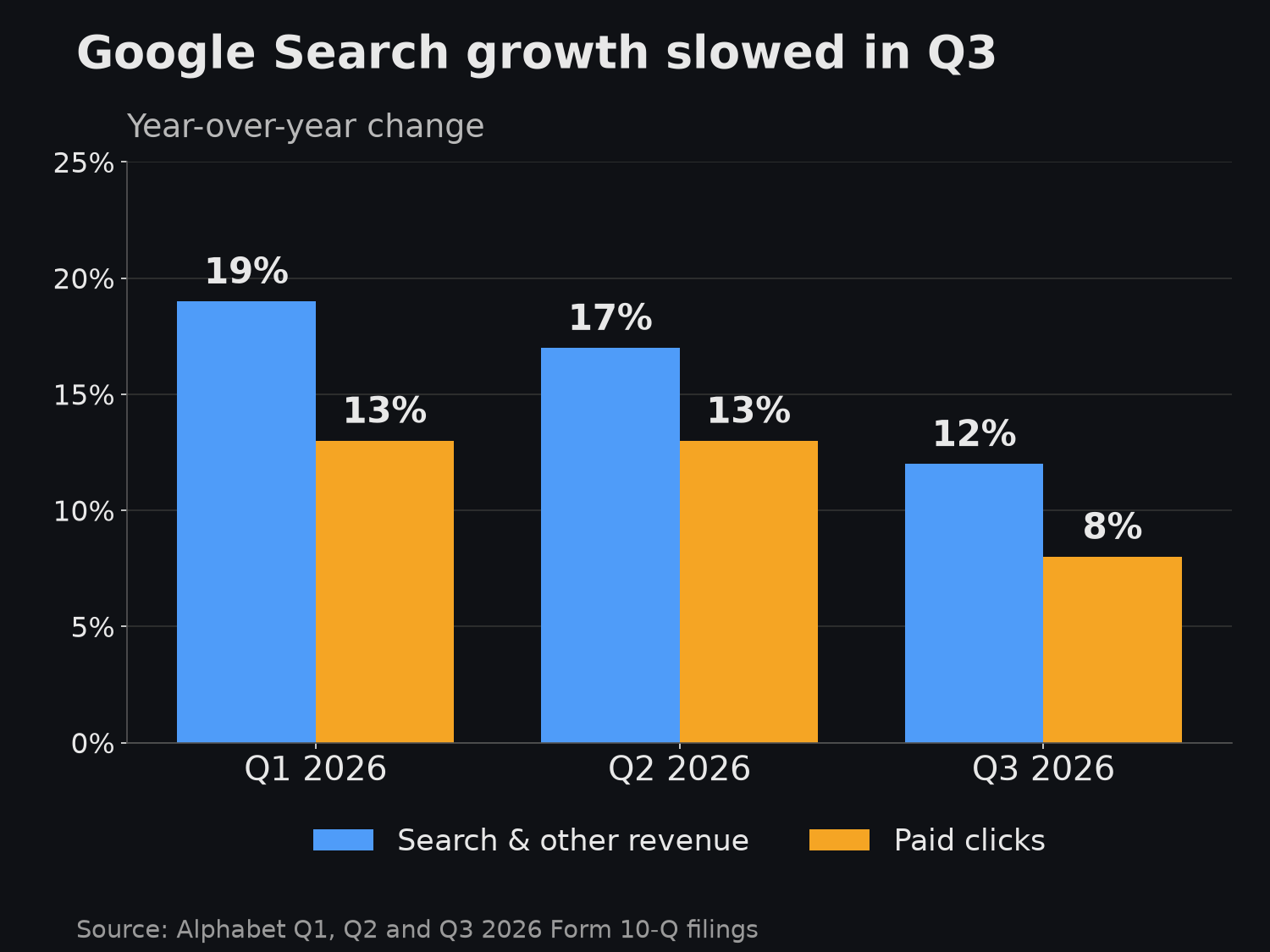
Google makes money when people click ads and publishers make money when people click through to their pages. For years Google could grow while sending a smaller share of clicks to the open web. AI Mode makes that harder for Google too, because an answer that ends the search also leaves fewer chances for an ad click. That gives Google its own reason to make AI answers lead somewhere. Digiday notes that Google has already updated AI Mode and AI Overviews to show links more often and more prominently and has added carousels of timely articles.
| Date | What happens |
|---|---|
| August 31, 2026 | Search generative AI control available to all sites worldwide |
| December 3, 2026 | Click and engagement metrics due to UK publishers |
| March 3, 2027 | Page-level grounding controls due |
Sources: Google Search Console Help, Digiday and the CMA notice.
My predictions for December and after
I think the December click data will show click-through rates inside AI features near the 1% range in Shepard's test. I also think most publishers will stay in anyway. A few large publishers with strong brands and direct audiences may opt out to gain leverage in licensing talks. For a mid-sized tech site that depends on search, leaving would mostly hand the citation to a competitor. Google's help page says content from other sites will still appear in these features and "may appear similar to yours." Google will probably keep adding links and ads inside AI Mode through 2027 because its search revenue growth now depends on it. The publishers that come through this best will be the ones that get cited often while building direct readership, which Chartbeat found rising from 13.5% to 15.9% of pageviews over two years.